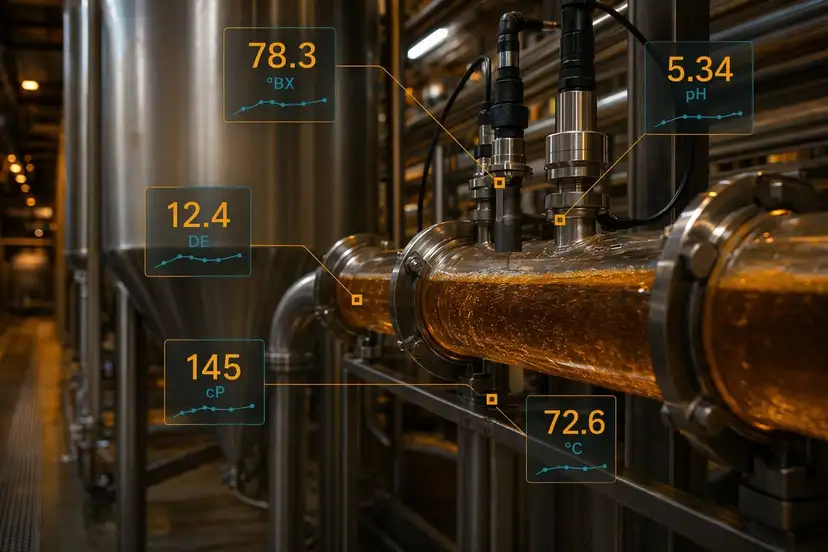
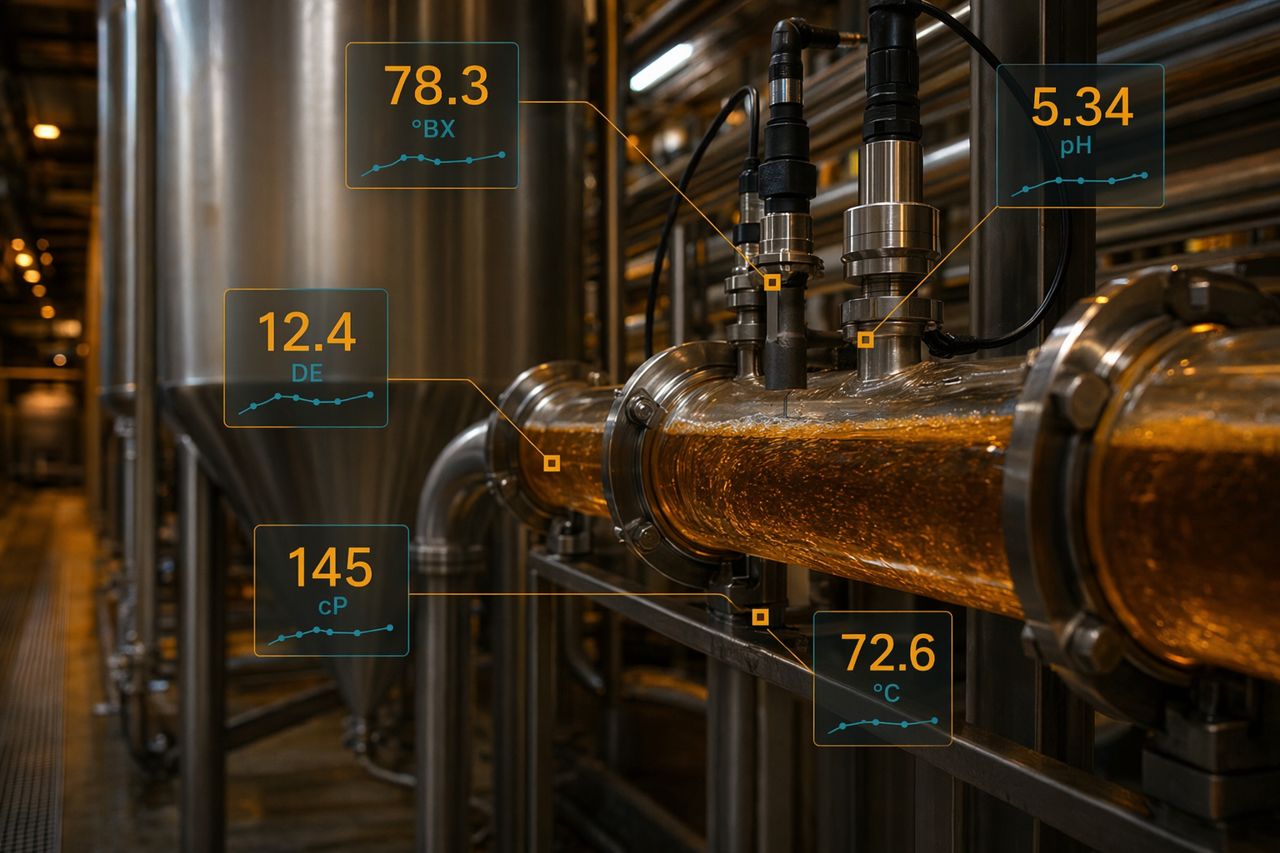
Starch Conversion Enzyme for Brewing Syrup DE Control
Brewing syrup buyers do not want surprises. They need adjunct syrup that lands on the agreed fermentability profile, pumps cleanly, filters predictably, and arrives with consistent DE from tanker to tanker.
BrixPilot supplies starch conversion enzyme programs for brewing adjunct syrup manufacturers who need tighter control across liquefaction, saccharification, finishing, and loadout. If your team is fighting DE drift, high viscosity, slow conversion, filtration drag, or brewery complaints about lot-to-lot variation, we help tune the enzyme side of the process to support stable production.
As an enzyme supplier for brewing syrup production, BrixPilot focuses on practical plant outcomes: controlled starch breakdown, repeatable sugar profiles, dependable dosing, and fewer off-spec holds.
Built for syrup plants serving brewery customers
Brewing adjunct syrup production puts pressure on every control point. Corn, rice, wheat, or other starch-based feedstocks can shift in quality. Slurry behavior changes. Liquefaction can look stable on paper while viscosity or residual dextrin load tells another story. Saccharification may reach target one day and lag the next.
BrixPilot helps production teams build a starch conversion enzyme approach around the syrup specification, not just the tank recipe.
Typical objectives include:
- Holding DE closer to the production target
- Improving fermentability consistency for brewery customers
- Reducing viscosity before filtration and finishing
- Supporting cleaner saccharification endpoints
- Limiting conversion bottlenecks that reduce daily throughput
- Improving confidence before tanker release
- Reducing rework, blending pressure, and customer claims
Enzyme solutions for controlled starch conversion
BrixPilot supports enzyme selection and supply for the key stages of brewing syrup manufacture.
Liquefaction support
Liquefaction performance sets the tone for the rest of the batch. If starch is not opened and dextrinized consistently, saccharification has to work harder and downstream viscosity can stay elevated.
BrixPilot liquefaction enzyme options are selected to help manufacturers:
- Break starch into a more manageable dextrin profile
- Improve slurry handling and transfer behavior
- Reduce viscosity-related load on pumps and heat exchangers
- Support stable cooking and hold-tank performance
- Create a more predictable substrate for saccharification
Saccharification support
Saccharification is where DE, fermentability, and final sugar profile become commercial issues. A syrup that misses target can create blending work, delayed release, or brewery-side performance concerns.
BrixPilot saccharification enzyme programs can support:
- Targeted DE development
- Consistent glucose and fermentable sugar formation
- Lower residual dextrin where the specification requires it
- Better endpoint repeatability across feedstock variation
- More stable production planning around conversion time
Debranching support for difficult profiles
When branched dextrins limit conversion or create endpoint drag, a debranching enzyme strategy may help unlock a cleaner fermentability path. BrixPilot can help evaluate whether a debranching component belongs in the process, especially where the plant is pushing tighter syrup specifications or faster tank turns.
When DE drift becomes a production problem
Small conversion changes can become large commercial issues when the syrup is destined for breweries. A tanker that is slightly outside target may still look usable internally, but it can create downstream inconsistency for the customer.
BrixPilot works with plants dealing with:
- DE values trending high or low against specification
- Long saccharification holds needed to reach release criteria
- Inconsistent fermentability between lots
- Viscosity spikes that slow filtration or loading
- Unexpected haze, filter loading, or finishing delays
- Increased blending to recover borderline batches
- Brewery customer complaints tied to extract performance
Our role is to help stabilize the enzyme program so production has fewer judgment calls at release.
Practical value for plant managers
BrixPilot is built for industrial syrup operations, not lab-only conversations. We align enzyme recommendations with how your plant actually runs: batch or continuous flow, existing metering equipment, available hold time, raw material range, pH control discipline, thermal profile, and tanker release workflow.
What better enzyme control can improve
- Uptime: less time waiting on slow conversion or reworking borderline syrup
- Consistency: tighter syrup profiles for repeat brewery orders
- Viscosity control: smoother transfers, filtration, and loadout
- Dosage reliability: enzyme programs matched to plant dosing realities
- Throughput: fewer conversion bottlenecks in saccharification and finishing
- Customer confidence: fewer off-spec tankers and fewer performance questions from brewery accounts
Application fit
BrixPilot starch conversion enzyme programs are relevant for manufacturers producing brewing adjunct syrups from starch-based feedstocks, including operations focused on fermentable syrup supply, high-DE syrup streams, maltose-influenced profiles, or customer-specific brewing adjunct blends.
We can support teams that need:
- A primary liquefaction enzyme
- A saccharification enzyme package
- A debranching component for conversion efficiency
- A replacement for inconsistent enzyme supply
- A second qualified supplier for risk reduction
- Technical review of conversion bottlenecks
- Enzyme supply aligned with recurring production schedules
How BrixPilot approaches trials
We keep trials tied to production economics and release criteria. The goal is not to create a theoretical best case. The goal is to define an enzyme program your operators can run consistently.
A typical evaluation may review:
- Current feedstock and slurry behavior
- Liquefaction performance and viscosity trend
- Saccharification time to target DE
- pH and temperature control windows already used by the plant
- Filtration and finishing constraints
- Tanker release specifications
- Dosage handling, storage, and metering reliability
- Cost impact from rework, holds, or off-spec loads
From there, BrixPilot can recommend an enzyme supply plan matched to your production target and operating constraints.
Built for dependable supply
Brewing syrup producers need enzyme supply that supports production planning. BrixPilot focuses on dependable industrial supply, clear product fit, and communication that helps purchasing, QA, and operations stay aligned.
You can come to us when you need a replacement enzyme, a backup qualified supplier, a more consistent conversion program, or support troubleshooting a stubborn DE-control issue.
Request a quote for your syrup specification
Tell us your feedstock, target DE range, process stage, current bottleneck, and expected production volume. BrixPilot will respond with a practical enzyme supply recommendation for your brewing syrup operation.
Request a quote using the on-site form