Reducing Rework in Brewing Syrup Plants | BrixPilot
Practical guidance for brewing adjunct syrup manufacturers on reducing rework caused by conversion drift, holding instability, viscosity rise, and evaporation variability.
Request pricing Practical guidance for brewing adjunct syrup manufacturers on reducing rework caused by conversion drift, holding instability, viscosity rise, and evaporation variability.
Request pricingRework in a brewing adjunct syrup plant rarely starts as one large failure. More often, it begins as a small drift: conversion runs slightly long, viscosity is higher than expected, a holding tank sits hot for longer than planned, or the evaporator has to work harder to hit Brix.
By the time the issue reaches finished syrup, the cost is already visible: extra tank time, filtration slowdowns, tanker delays, blend-back decisions, and more lab attention than the schedule allowed.
For plant managers, the target is not simply “better enzyme performance.” The target is repeatable syrup: predictable fermentability, manageable viscosity, stable DE progression, clean filtration, and fewer off-spec tankers leaving the loading bay.
BrixPilot supports manufacturers looking for an enzyme supplier for brewing syrup production with a practical focus on process reliability, dosage confidence, and production-floor consistency.
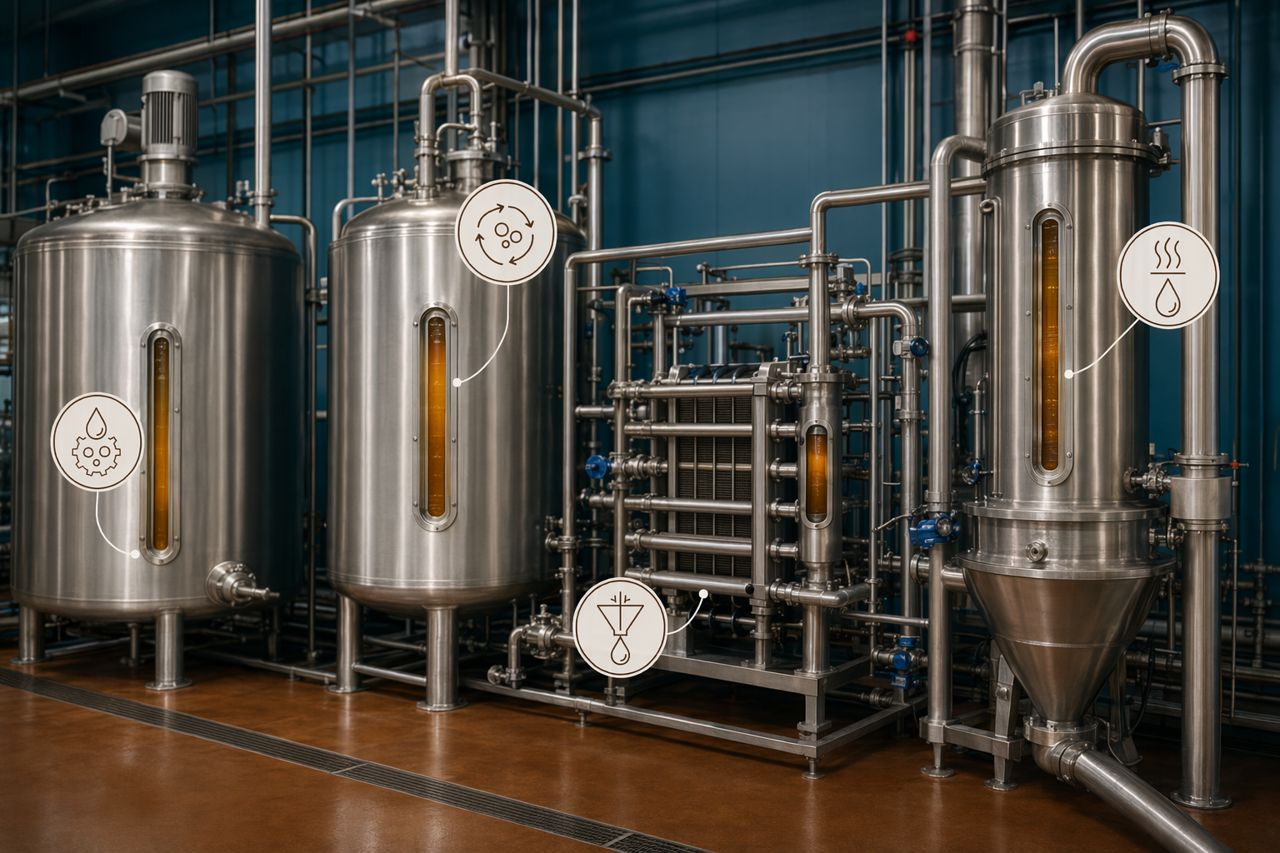
Brewing adjunct syrup production depends on a controlled chain of decisions. Liquefaction, saccharification, clarification, evaporation, holding, and loading all interact. A deviation upstream can become a much larger problem downstream.
Typical rework triggers include:
The common thread is control. If conversion and viscosity are not predictable, the plant loses scheduling confidence.
Conversion is one of the highest-leverage points in the process. If starch breakdown is inconsistent, the effects move through the line quickly.
Poor conversion control can create:
In a brewing syrup plant, the issue is not only whether conversion eventually happens. The issue is whether it happens on time, within the operating window, and with enough repeatability to protect the production plan.
Operators often see conversion trouble before it appears as a final specification failure. Warning signs include:
A reliable enzyme program should support predictable conversion under real plant conditions, not just ideal conditions.
Holding tanks are sometimes treated as neutral storage. In practice, they are active risk zones.
When syrup sits longer than expected, especially at elevated temperature, several problems can stack together:
Holding risk is usually caused by something else: filtration delay, evaporator bottleneck, tanker availability, or upstream conversion running late. The enzyme program cannot fix every scheduling issue, but it can help reduce the number of batches entering holding with borderline viscosity or unstable conversion status.
Evaporation is where upstream inconsistency becomes harder to hide. As water is removed, viscosity behavior, color formation, fouling tendency, and Brix control all become more sensitive.
If syrup enters the evaporator with variable conversion or solids profile, the evaporator may need more correction than planned. That can affect:
The best evaporator performance often starts before the evaporator. Consistent liquefaction and saccharification reduce the amount of correction needed at the concentration step.
Brewing adjunct syrup manufacturers are not all running the same process. Feedstock, cook profile, tank geometry, pH control, heat recovery, filtration configuration, and target fermentability all influence enzyme performance.
A practical enzyme supplier should help evaluate questions such as:
The answer is rarely a single product swap. It is usually a tighter match between enzyme system, process conditions, and production objectives.
Do not only track the final off-spec tanker. Track where the batch first showed signs of trouble. The first warning may be high viscosity after liquefaction, delayed filtration, slow Brix correction, or fermentability drift before release.
A batch that sits too long may look like a holding problem, but the root cause may be slow conversion or filtration restriction upstream. Tag batches by cause, not just by symptom.
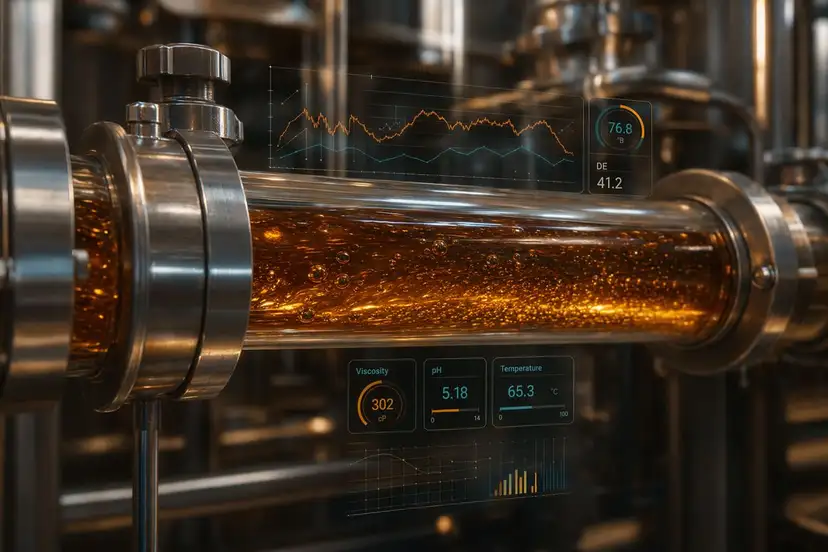
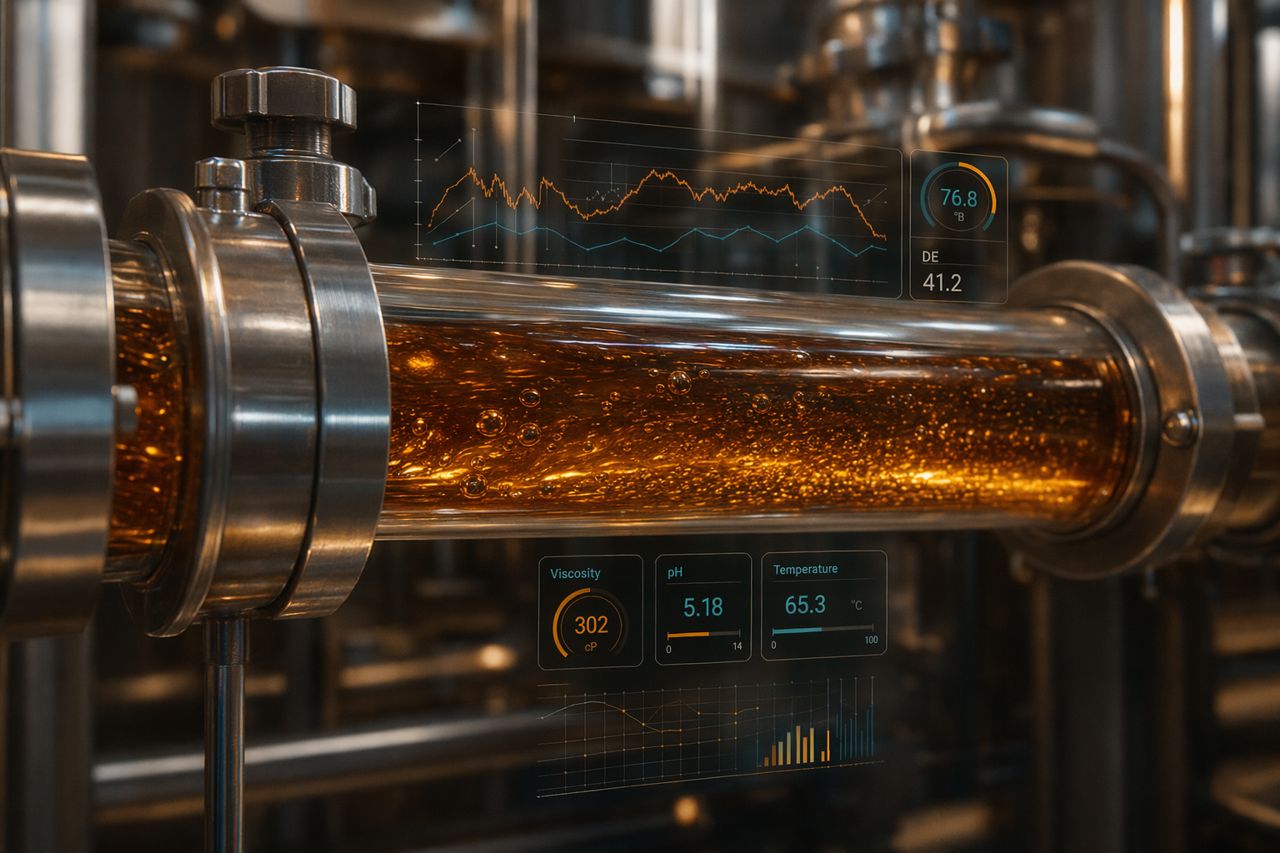
Single readings can mislead. Trend Brix, DE, viscosity, pH, temperature, and hold time together. Rework often appears when two or three variables drift at once.
Even a well-selected enzyme program can underperform if storage, addition timing, mixing, or dosing discipline changes between shifts. Treat enzyme addition as a control point, not a routine ingredient step.
A useful enzyme partner should understand plant constraints: uptime targets, clean-in-place windows, tanker scheduling, and the cost of holding inventory in the wrong tank.
BrixPilot works with brewing adjunct syrup manufacturers that need dependable enzyme solutions for conversion control, fermentability targeting, viscosity management, and fewer rework decisions.
Our approach is practical:
The goal is not complexity. The goal is a syrup line that behaves predictably from cook to tanker.
It may be time to review your current enzyme setup if you are seeing:
Extra time is expensive. Rework uses tank capacity, energy, labor, and schedule margin. A better-controlled enzyme program can help reduce those hidden costs.
If your brewing syrup plant is dealing with conversion drift, holding losses, viscosity variation, or off-spec tanker risk, BrixPilot can help evaluate the enzyme fit for your process.
Use the on-site request a quote form to share your feedstock, target syrup profile, current process constraints, and the rework problem you want to reduce. We will respond with a practical recommendation for your production line.
Tell us your application and volume — we reply with pricing and lead time.