Filtration Bottlenecks After Starch Conversion: What Syrup Plants Should Check
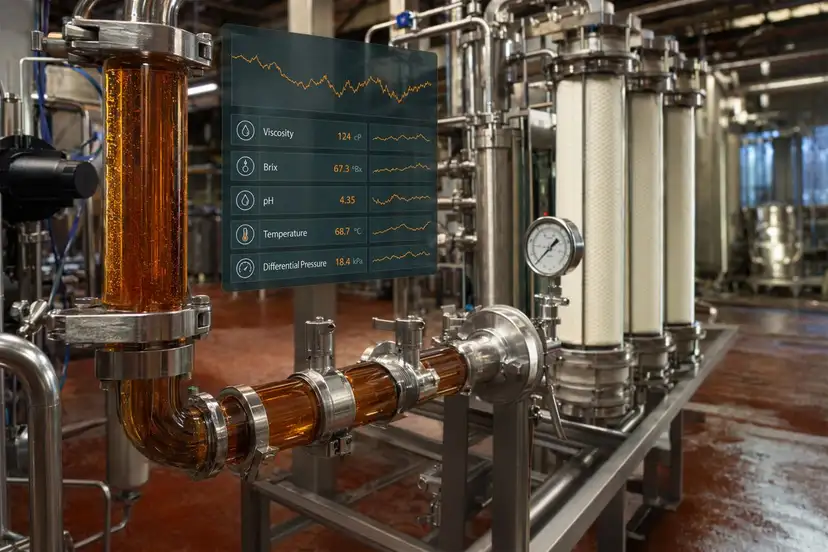
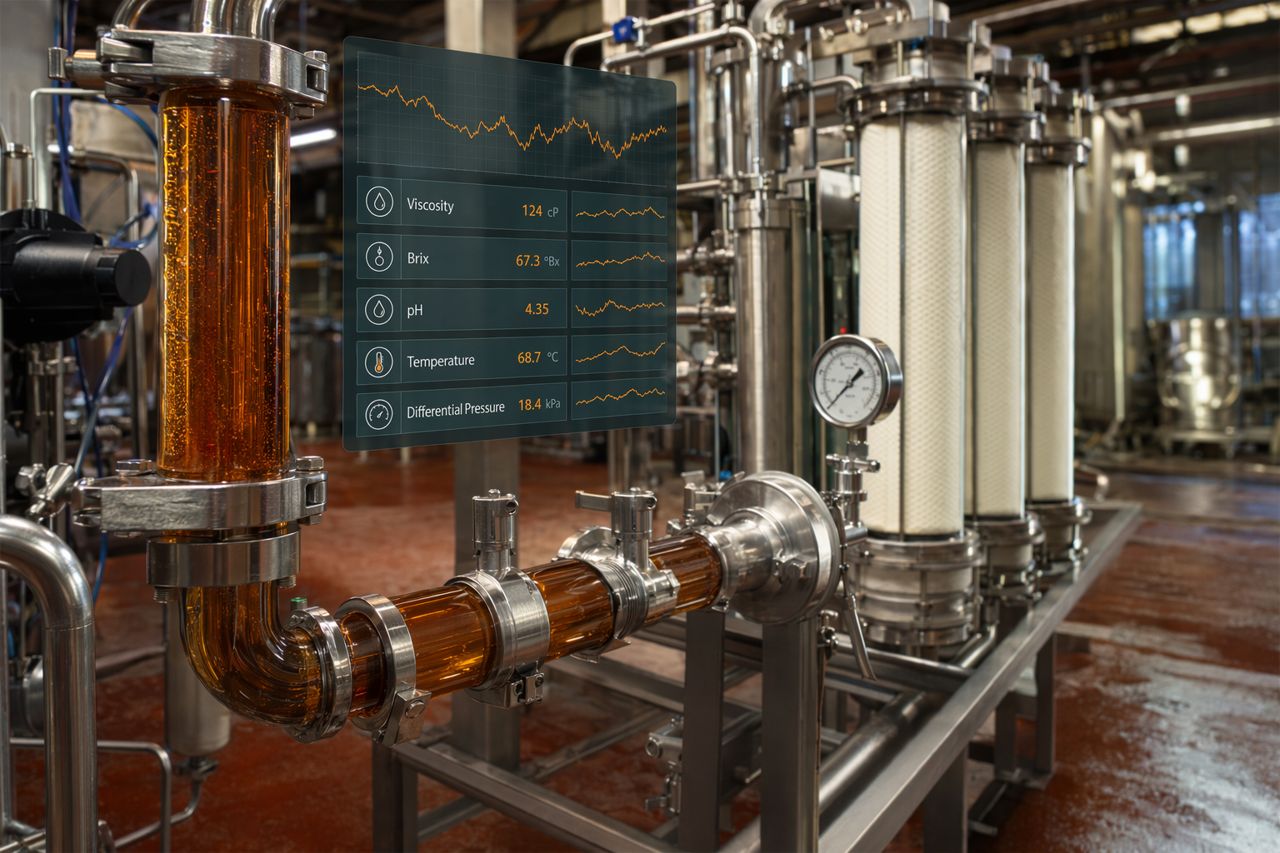
For a brewing adjunct syrup manufacturer, filtration problems rarely begin at the filter. Slow flow, rising differential pressure, cloudy filtrate, frequent filter aid adjustments, and delayed tanker loading are usually symptoms of upstream conversion control.
When starch conversion is inconsistent, the plant pays for it downstream: higher viscosity, unstable DE progression, inconsistent fermentability, longer cycle times, and a higher risk of off-spec syrup waiting in tank. The filter skid becomes the visible bottleneck, but the root cause may be in slurry preparation, liquefaction, saccharification, pH transition, enzyme dosing, or holding conditions.
BrixPilot supports syrup plants that need an enzyme supplier for brewing syrup production with practical conversion programs built around uptime, viscosity control, dosage reliability, and predictable tanker release.
Why filtration slows after starch conversion
Filtration is a separation step, not a correction step. If the converted syrup carries excess insoluble starch, partially swollen granules, high-molecular dextrins, protein-fiber complexes, or unstable haze-forming material, the filter has to manage a load it was not designed to absorb.
Common plant-floor symptoms include:
- Filter pressure climbing earlier than expected
- Shorter filter cycles and more frequent media changeouts
- Slower filtrate rate at the same temperature and solids level
- Hazy or inconsistent filtrate despite normal operating discipline
- Holding tanks waiting on filtration before blend or loading
- Extra recirculation, rework, or dilution to recover flow
- Tankers delayed because final syrup does not clear release checks
When these patterns repeat by lot, shift, starch source, or production campaign, the conversion system deserves a closer look.
Check 1: Liquefaction consistency before blaming the filter
Liquefaction sets the viscosity foundation for the rest of the process. If starch is not uniformly hydrated, gelatinized, and reduced into a pumpable dextrin profile, downstream filtration becomes unstable.
Plant teams should review:
- Slurry make-up consistency from batch to batch
- Agitation coverage in the make-down and liquefaction zones
- Steam contact, hot spots, or cold pockets in the heating profile
- Residence time variation caused by throughput changes
- Enzyme addition point and dispersion into the starch stream
- Viscosity movement across the liquefaction hold
- Any visible grit, fish-eyes, or residual swollen particles
A liquefaction enzyme program should not only reduce viscosity; it should do so reliably across real plant variation. That includes starch lot changes, dry solids swings, line speed changes, and occasional start-stop conditions.
Check 2: Enzyme dispersion and dosage reliability
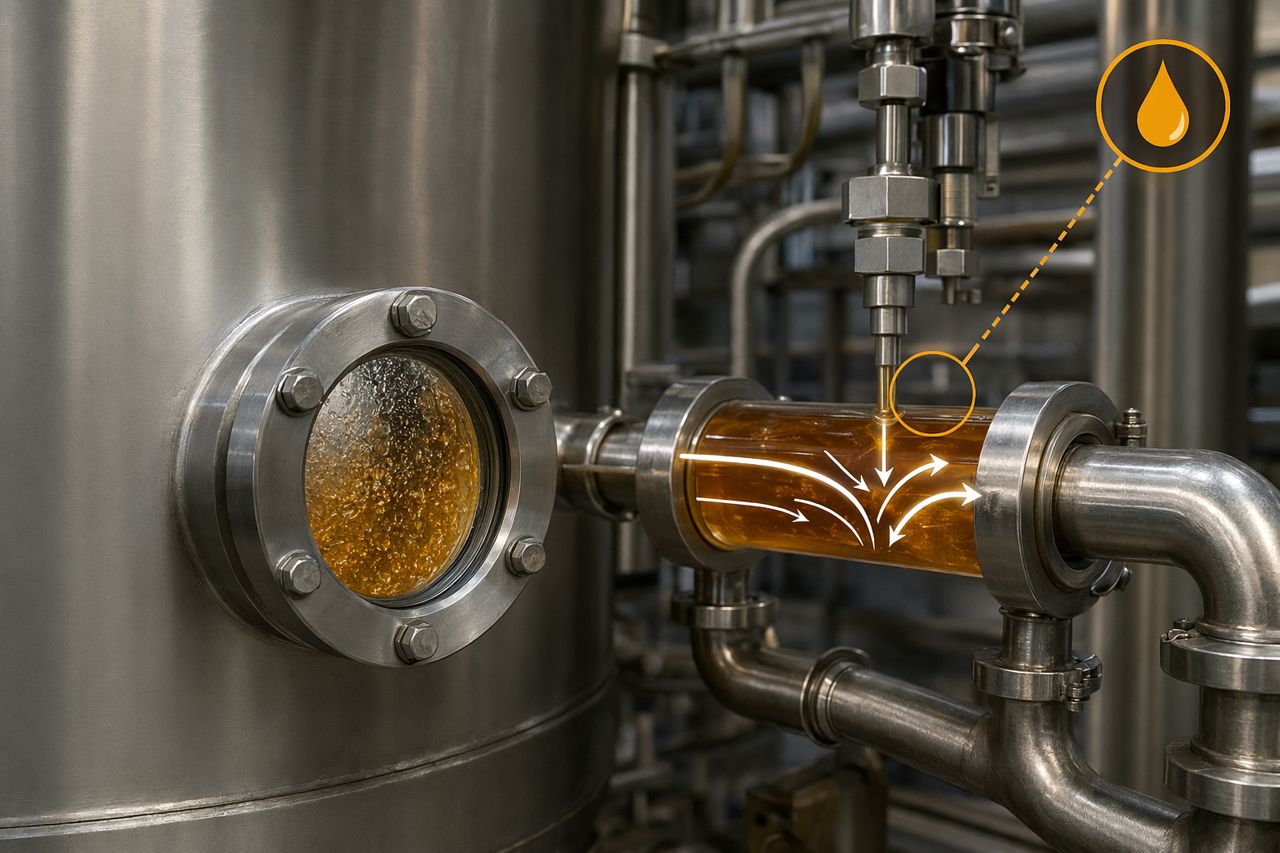
Even the right enzyme can underperform if it is introduced into the wrong hydraulic condition. Poor dispersion creates local over-treatment and under-treatment at the same time. The average dosage may look correct on the batch sheet while sections of the tank or pipework remain outside the intended conversion window.
Review these practical points:
- Is the enzyme metered into a zone with dependable turbulence?
- Does the addition point avoid dead legs and laminar sections?
- Is the dosing pump stable at low-flow and high-flow conditions?
- Are operators making manual adjustments that vary by shift?
- Are transfer lines flushed consistently after stops?
- Is the enzyme storage area protected from avoidable heat exposure?
For B2B syrup production, dosage reliability is not a lab preference. It directly affects filter cycle length, viscosity control, fermentability target hitting, and tanker release confidence.
Check 3: Dextrin profile and fermentability target alignment
Brewing adjunct syrups are not all designed for the same carbohydrate profile. A syrup intended to support brewer fermentability targets needs controlled conversion, not simply maximum breakdown.
If saccharification is pushed too far, undershot, or allowed to drift during holding, the syrup may meet one specification while creating problems elsewhere. Filtration can be affected by dextrin distribution, soluble solids behavior, and haze-forming residuals.
Watch for these signals:
- DE movement that varies more than expected across campaigns
- Fermentability results that require frequent blend correction
- Syrup viscosity that is inconsistent at the same Brix
- Filtration rates that correlate with saccharification hold time
- Final syrup clarity changing by starch source or enzyme lot
The goal is a stable conversion window: enough breakdown for pumpability, filtration, and brewer fermentability requirements, while preserving the syrup profile specified by your customer.
Check 4: pH and temperature transitions between steps
Enzymes respond to the operating environment. If pH and temperature transitions are uncontrolled, conversion can continue, slow down, or become uneven during transfer and holding. That creates uncertainty before filtration.
Key areas to check:
- pH adjustment timing and mixing completeness
- Temperature loss in transfer lines and intermediate tanks
- Hold time variation before filtration
- Whether conversion continues unintentionally in the feed tank
- Whether the syrup reaches the filter at a consistent condition
- Sensor placement versus the actual syrup condition entering the skid
For plant managers, the question is not just whether setpoints exist. The question is whether the syrup entering filtration is the same syrup the process recipe assumes.
Check 5: Residual starch and partially converted material
Residual starch is one of the most direct causes of filtration drag. It can blind filter media, increase turbidity, and force operators to slow the skid to maintain filtrate quality.
Potential upstream causes include:
- Incomplete starch wet-out
- Poor jet cooking or heating uniformity
- Short residence time during production pushes
- Inadequate enzyme contact in high-solids zones
- Starch source variation not matched by process adjustment
- Inconsistent liquefaction before saccharification begins
If filtration problems increase after a raw material change, do not assume the filter aid program needs to carry the full burden. The enzyme and conversion strategy may need to be tuned for the new substrate behavior.
Check 6: Protein, fiber, and fine solids load
Not every filtration issue is starch conversion alone. Brewing adjunct syrup plants working with grain-derived streams also manage protein, fiber, oil, and fine insoluble material. These can interact with carbohydrate profile and viscosity to form difficult filter cakes.
Review whether the problem is linked to:
- Incoming grain or starch quality
- Mill or separation performance upstream
- Higher fine solids carryover
- Centrifuge or screen condition
- Filter precoat consistency
- Changes in filter aid handling
- Syrup temperature and viscosity at the filter inlet
A strong troubleshooting process separates mechanical loading from biochemical conversion. Both matter, but they require different corrective actions.
Check 7: The true cost of “just slow the filter down”
Reducing flow through the filter may protect filtrate clarity in the short term, but it often hides a conversion issue that continues to cost the plant.
Operational impacts include:
- Longer batch cycles
- Lower daily syrup output
- More energy spent holding and reheating
- Higher labor attention on filtration
- More frequent filter media intervention
- Tank capacity tied up in waiting product
- Higher risk of missing loading windows
- More pressure on final blending to correct variation
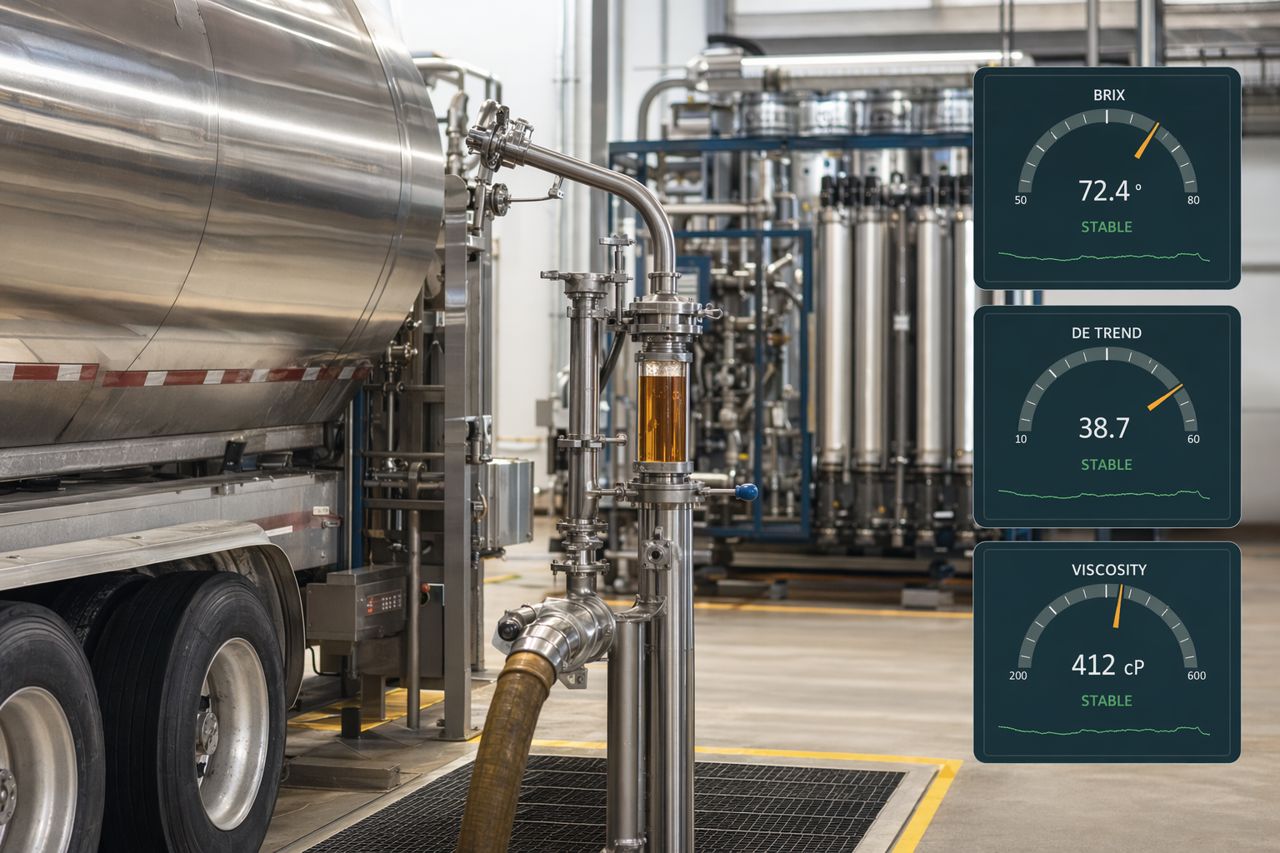
For a plant shipping brewing adjunct syrup by tanker, filtration stability is commercial stability. If the syrup cannot clear the skid predictably, production planning and customer commitments become harder to defend.
A practical troubleshooting sequence
When filtration becomes the bottleneck after starch conversion, BrixPilot recommends a structured review rather than isolated adjustments.
1. Trend the problem by campaign
Compare filtration performance against starch lot, solids level, liquefaction conditions, saccharification hold, final Brix, pH trend, and operator shift. Look for repeatable patterns.
2. Confirm viscosity before filtration
If viscosity is drifting at the same Brix and temperature, the filter is receiving inconsistent feed. Conversion control should be investigated before changing filter hardware.
3. Inspect enzyme addition and mixing
Verify that dosing equipment, injection location, pump turndown, and mixing energy are suitable for real production flow. A stable recipe still fails if the enzyme does not reach the starch evenly.
4. Review transition holds
Intermediate tanks and transfer lines can become unplanned reaction zones. Confirm whether the syrup profile is still moving before filtration.
5. Separate insoluble load from conversion drift
Use plant observations, clarity checks, and process trends to determine whether filtration is being limited by solids loading, high viscosity, residual starch behavior, or a combination.
6. Tune the enzyme program to the operating reality
The best enzyme program is not only selected for substrate chemistry. It is selected for how your plant actually runs: available mixing, production rate changes, temperature profile, pH control, holding time, and release specifications.
What BrixPilot brings to syrup plants
BrixPilot works with brewing adjunct syrup manufacturers that need enzyme programs aligned with plant performance, not just ingredient replacement. Our focus is practical: stable conversion, controlled viscosity, repeatable fermentability targets, and fewer filtration surprises.
We can support discussions around:
- Liquefaction enzyme selection for viscosity control
- Saccharification strategy for target carbohydrate profile
- Conversion window design for brewing adjunct syrup specifications
- Process-fit enzyme dosing recommendations
- Troubleshooting filtration issues linked to starch conversion
- Improving consistency across starch sources and production campaigns
The objective is simple: keep syrup moving, keep filtration predictable, and reduce the number of tanks that require intervention before shipment.
When to request support
It may be time to review the enzyme program if your plant is seeing:
- Repeating filter slowdowns after conversion
- Viscosity drift at the same Brix target
- Fermentability variation that affects customer acceptance
- Longer saccharification holds to chase specification
- More frequent filter aid adjustments
- Delayed tanker loading from clarity or flow issues
- Different filtration behavior after a starch supplier change
If these issues are showing up in production records, BrixPilot can help evaluate where conversion control is affecting downstream throughput.
Request a quote through the on-site form to discuss an enzyme supply program for brewing adjunct syrup production.