Brewing adjunct syrup logistics starts in the process tank
For a brewing adjunct syrup manufacturer, a late tanker is rarely just a transport problem. It is often the visible end of a process-control issue that began upstream: starch not fully opened, viscosity higher than expected, saccharification drifting, filtration taking longer, or final Brix and fermentability targets needing correction before release.
That is why the right enzyme supplier for brewing syrup production should be evaluated on more than product availability. The real value is whether the enzyme program supports predictable flow behavior, repeatable conversion, clean transfer, and reliable shipping windows.
BrixPilot works with syrup plants where the commercial pressure is simple: keep tanks moving, keep specifications tight, and load clean tankers on schedule.
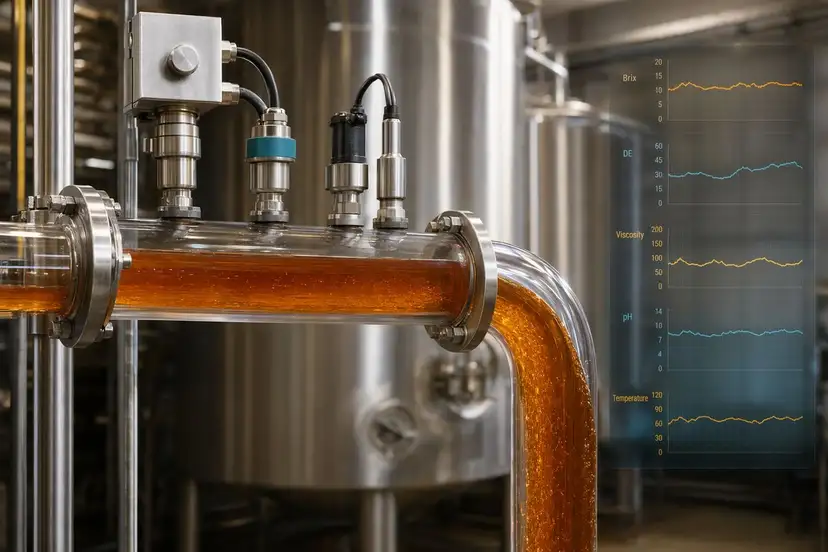
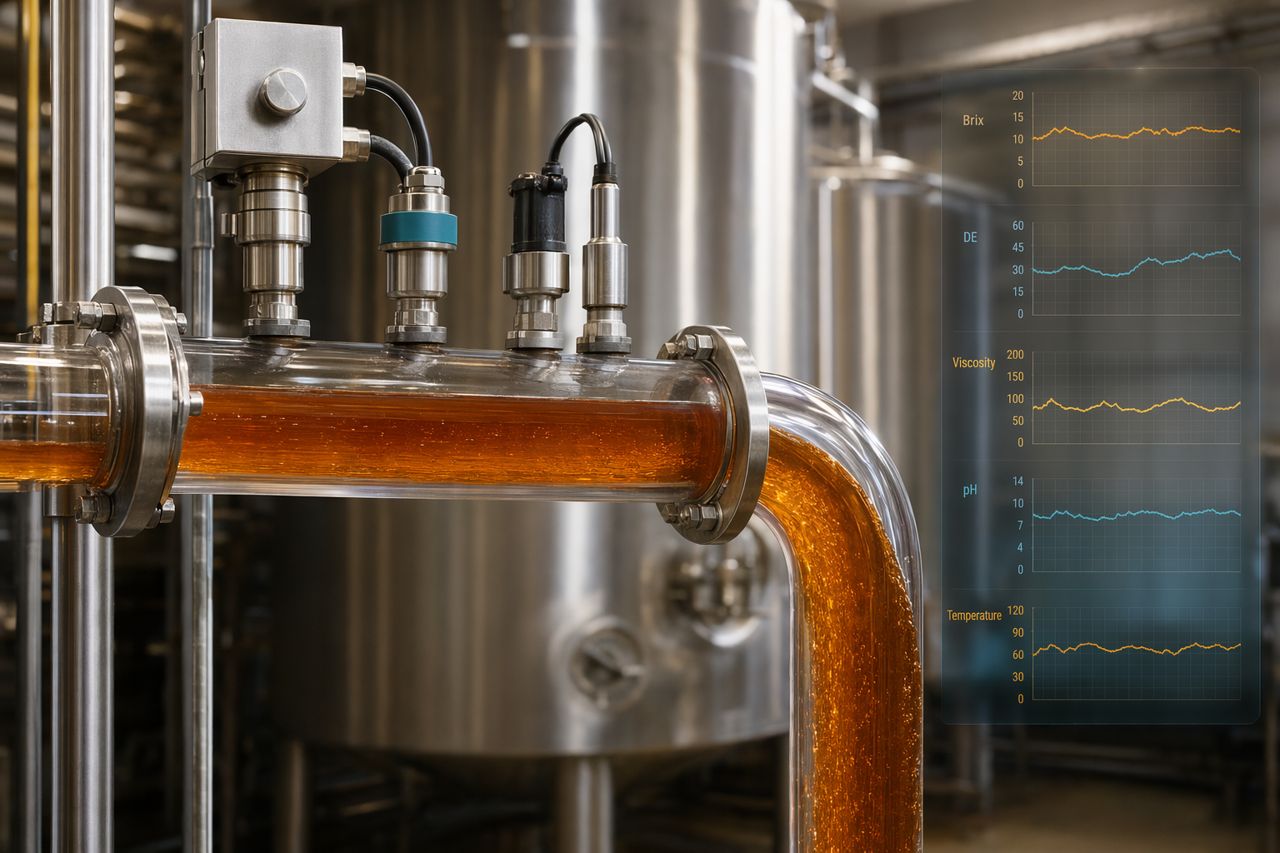
The logistics chain depends on viscosity control
Adjunct syrup has to move through a plant before it ever moves down the road. When viscosity is under control, the entire logistics chain becomes easier to schedule:
- Liquefaction tanks discharge more consistently
- Heat exchangers maintain better transfer performance
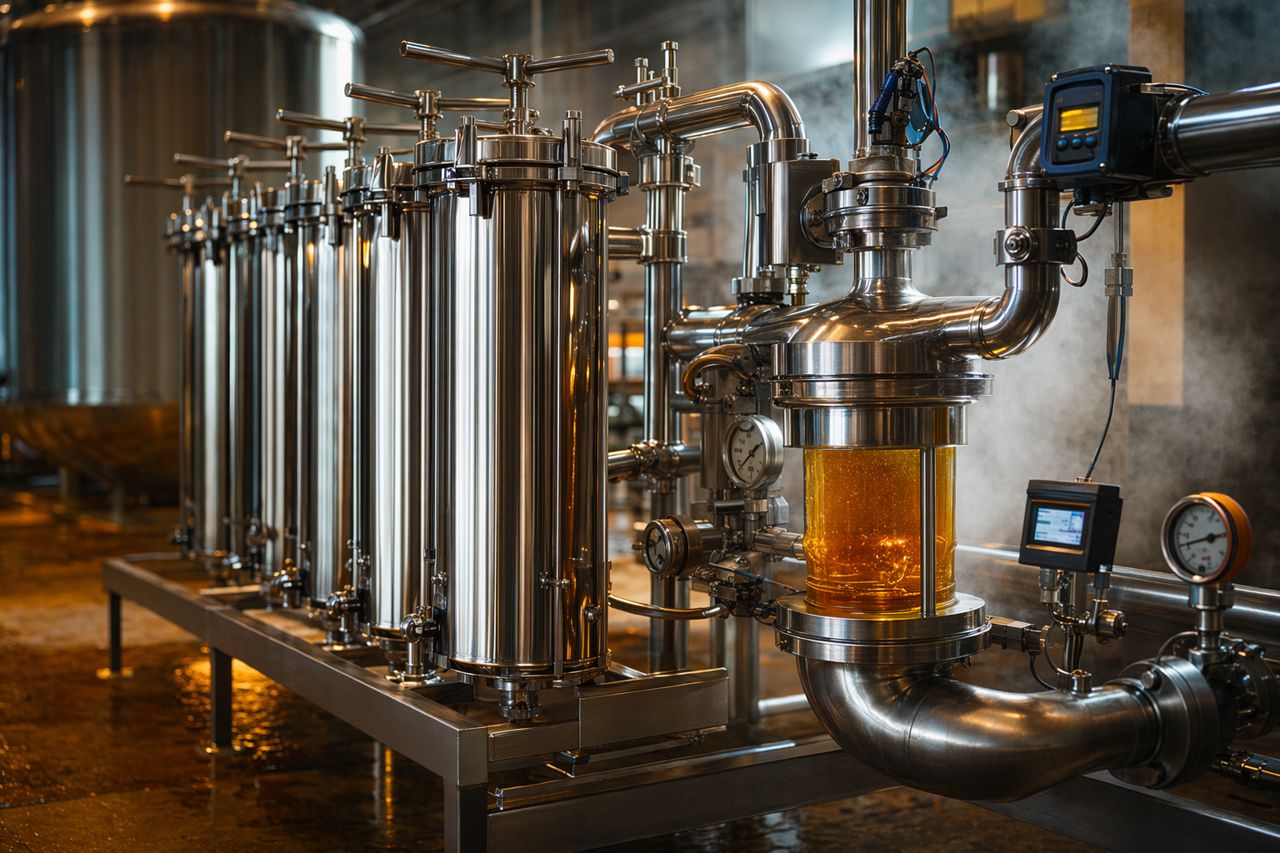
- Filters and polishing steps face fewer slowdowns
- Transfer pumps run with less strain
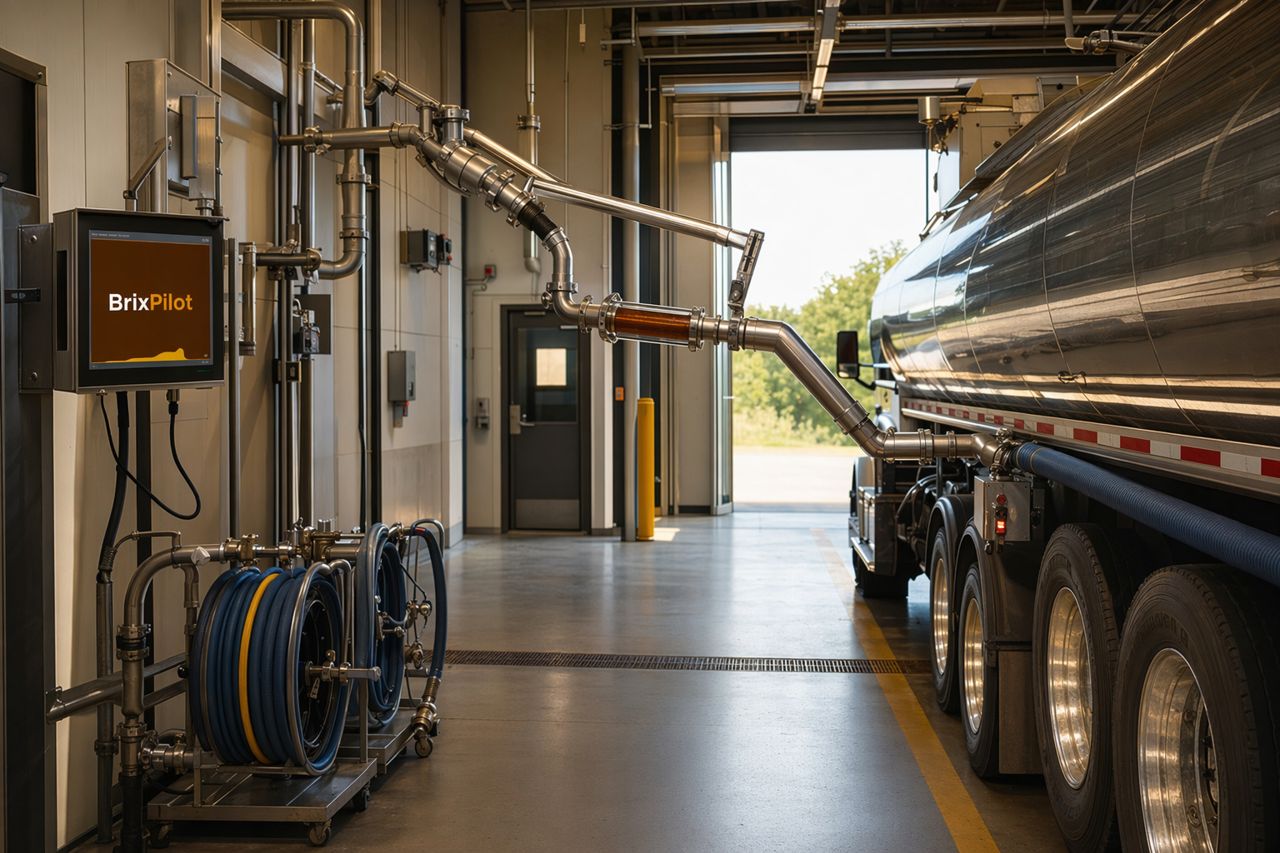
- Loading arms operate within expected flow ranges
- Tanker dwell time is easier to predict
When viscosity drifts high, plant teams feel it immediately. A line that normally clears on time begins to drag. A filter run that should be routine needs attention. A tanker scheduled for a narrow pickup window waits while final adjustments are made.
Enzyme selection and dosing reliability are central to this. Liquefaction enzymes need to support controlled starch breakdown without creating process surprises. Saccharification enzymes need to help the plant reach the intended fermentability profile without forcing operators to chase the tank late in the batch.
Fermentability targets are a delivery promise
Breweries buy adjunct syrup because it provides fermentable extract in a form that is easier to handle than dry adjuncts. If the syrup arrives outside the expected profile, the problem transfers directly into the brewery process.
For syrup manufacturers, the practical questions are:
- Will the tanker match the ordered fermentability target?
- Will Brix and DE sit within the customer’s expected range?
- Will the syrup unload smoothly at the receiving brewery?
- Will the product behave consistently from lot to lot?
- Will the delivery arrive inside the agreed window?
A strong enzyme program reduces variation before it becomes a logistics issue. It gives production teams a more stable path from raw material intake through conversion, filtration, storage, and loading.
Tanker hygiene is easier when syrup behavior is predictable
Tanker hygiene depends on disciplined cleaning, inspection, and loading procedures. But syrup consistency also matters. High-viscosity or poorly finished syrup can increase residual heel, complicate drain-down, and raise the risk of slow or incomplete transfer.
A process that consistently produces syrup with the intended flow characteristics helps protect hygiene routines in three ways:
- Cleaner line clearance — predictable viscosity supports more complete movement through transfer lines and loading arms.
- Reduced holding and rework — fewer late-stage corrections mean fewer extended tank holds before loading.
- Lower risk at the dock — operators can load within the planned window instead of improvising around a difficult batch.
The goal is not to make sanitation dependent on enzymes. The goal is to keep the syrup itself from creating unnecessary cleaning and scheduling friction.
Where enzyme decisions affect delivery windows
Delivery performance is shaped by a sequence of small plant-floor variables. BrixPilot reviews these variables with production and quality teams when developing an enzyme supply recommendation:
Raw material variability
Corn, wheat, rice, and other adjunct sources can vary in starch structure, solids behavior, and processing response. An enzyme program should tolerate realistic incoming variation without constant intervention.
Liquefaction control
The first breakdown step sets the tone for pumpability, heat transfer, and downstream filtration. Inconsistent liquefaction can create batch-to-batch viscosity swings that show up later at the loading rack.
Saccharification endpoint discipline
Fermentability targets depend on reliable saccharification behavior. The plant needs a program that supports the desired profile within normal hold times and operating ranges.
Filtration and polishing load
When upstream conversion is uneven, solids management and filtration can become the bottleneck. That bottleneck often turns into tanker delay.
Storage and transfer behavior
Finished syrup must remain manageable through storage, recirculation if used, transfer, and loading. Stable viscosity and predictable flow reduce the chance of last-minute operational workarounds.
What plant managers should expect from an enzyme supplier
A dependable supplier should help the plant reduce operational uncertainty, not add another variable. For brewing adjunct syrup production, that means support around:
- Enzyme blend selection for the target syrup profile
- Supply formats compatible with existing storage and handling
- Dose repeatability in real production conditions
- Process tolerance across temperature, pH, solids, and hold-time variation
- Changeover planning when raw materials or customer targets shift
- Practical troubleshooting when viscosity, DE, or fermentability trends move off target
BrixPilot’s approach is technical but plant-floor practical. We focus on the connection between conversion control and commercial delivery performance: fewer off-spec tankers, smoother loading, less rework, and more dependable shipment planning.
The cost of an off-spec tanker is bigger than the load
An off-spec tanker can create cost in multiple places at once. The syrup may need rework. A loading slot may be lost. A carrier may wait. A brewery customer may need to adjust its own production plan. Quality and operations teams may spend hours investigating what changed.
The enzyme program is not the only factor, but it is one of the controllable levers. When conversion is consistent, the plant has more time and fewer surprises. That improves the odds that finished syrup is released, loaded, and delivered as planned.
A more reliable route from conversion to customer dock
Good logistics for brewing adjunct syrup are built on disciplined process control. Tanker hygiene, loading speed, delivery windows, and customer confidence all benefit when syrup leaves production with predictable Brix, DE, viscosity, and fermentability behavior.
If your plant is dealing with viscosity drift, late saccharification corrections, filtration slowdowns, or recurring tanker delays, BrixPilot can help review the enzyme side of the process.
Ready to tighten your adjunct syrup logistics? Request a quote through the on-site form and tell us your target syrup profile, raw material base, and current process bottleneck.